The diagrams below are the ones used across this documentation and in the repository’s own
README files. Each is a single SVG file under docs/diagrams/
Layered ownership model
LAYER
EXPRESSED AS
enterprise
policy that applies to all of Patterson
sub-org
catalog scoped to a business segment
department
grouping owned by a function
team
grouping owned by a delivery group
repository
settings committed beside the code
user
individual preference
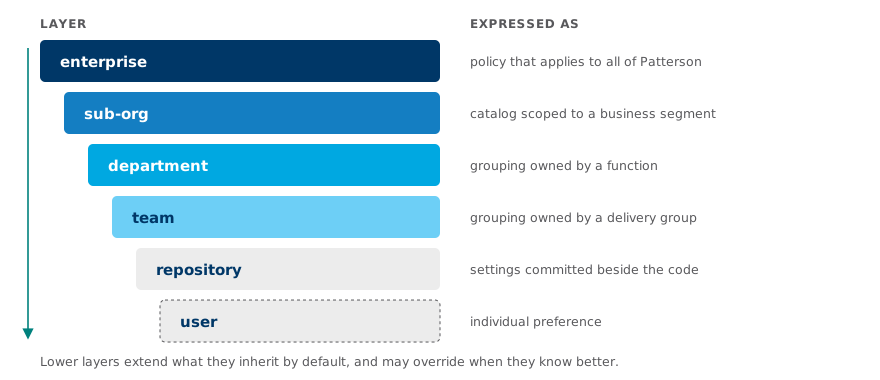
Lower layers extend what they inherit by default, and may override when they know better.
Six-layer ownership model from enterprise to user, showing where each layer is expressed and that lower layers extend or override higher ones
Source: docs/diagrams/layered-model.svg/diagrams/layered-model.svg
Marketplace topology
ENTERPRISE CATALOG
INCUBATING
patterson-corp
capability true for all of Patterson
engineering
delivery, infrastructure,
security and operations
brand
identity, design tokens,
editorial voice
patterson-labs
work that has not yet earned
durable status
Graduates upward once an owner
and a review cadence exist.
promotion
SUB-ORG CATALOGS
patterson-dental
segment-particular capability
patterson-vet
segment-particular capability
Each catalog is separately owned and
separately subscribable. Segment
differences are real, not flattened.
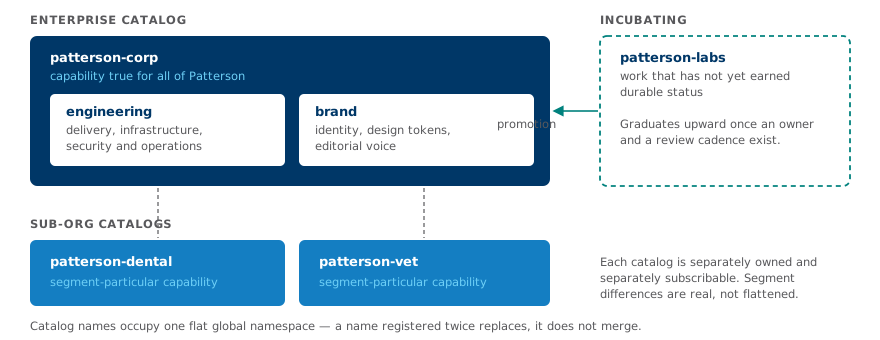
Catalog names occupy one flat global namespace — a name registered twice replaces, it does not merge.
Marketplace topology: an enterprise catalog and an incubating catalog above two sub-org catalogs, each holding groupings of capabilities
Source: docs/diagrams/marketplace-topology.svg/diagrams/marketplace-topology.svg
Anatomy of a capability
ALWAYS LOADED
LOADED ON DEMAND
SKILL.md
name · description · triggers
the decision rules, and
pointers to everything else
Kept lean deliberately: this is the
cost paid on every invocation.
references/
the full source material, split by topic — read only when needed
scripts/
executable checks — a claim the capability can prove rather than assert
assets/
text artifacts the capability installs or hands to a project
_SOURCES.md · REFERENCES.md
where every assertion came from, and what the source did not say
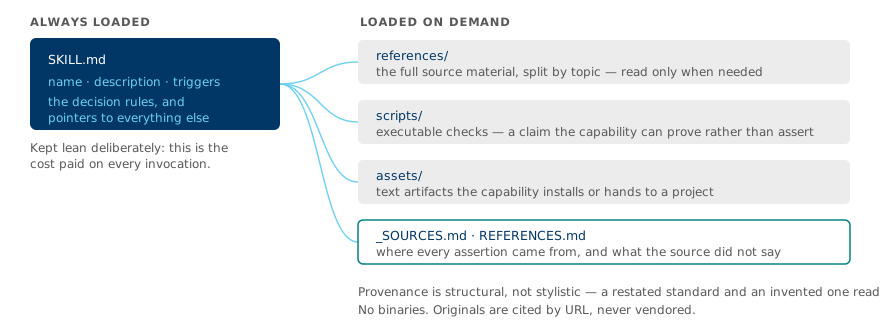
Provenance is structural, not stylistic — a restated standard and an invented one read alike without it.
No binaries. Originals are cited by URL, never vendored.
Anatomy of a capability: a lean SKILL.md pointing to references, scripts, assets, and provenance files
Source: docs/diagrams/skill-anatomy.svg/diagrams/skill-anatomy.svg